
Hopewood Baskets
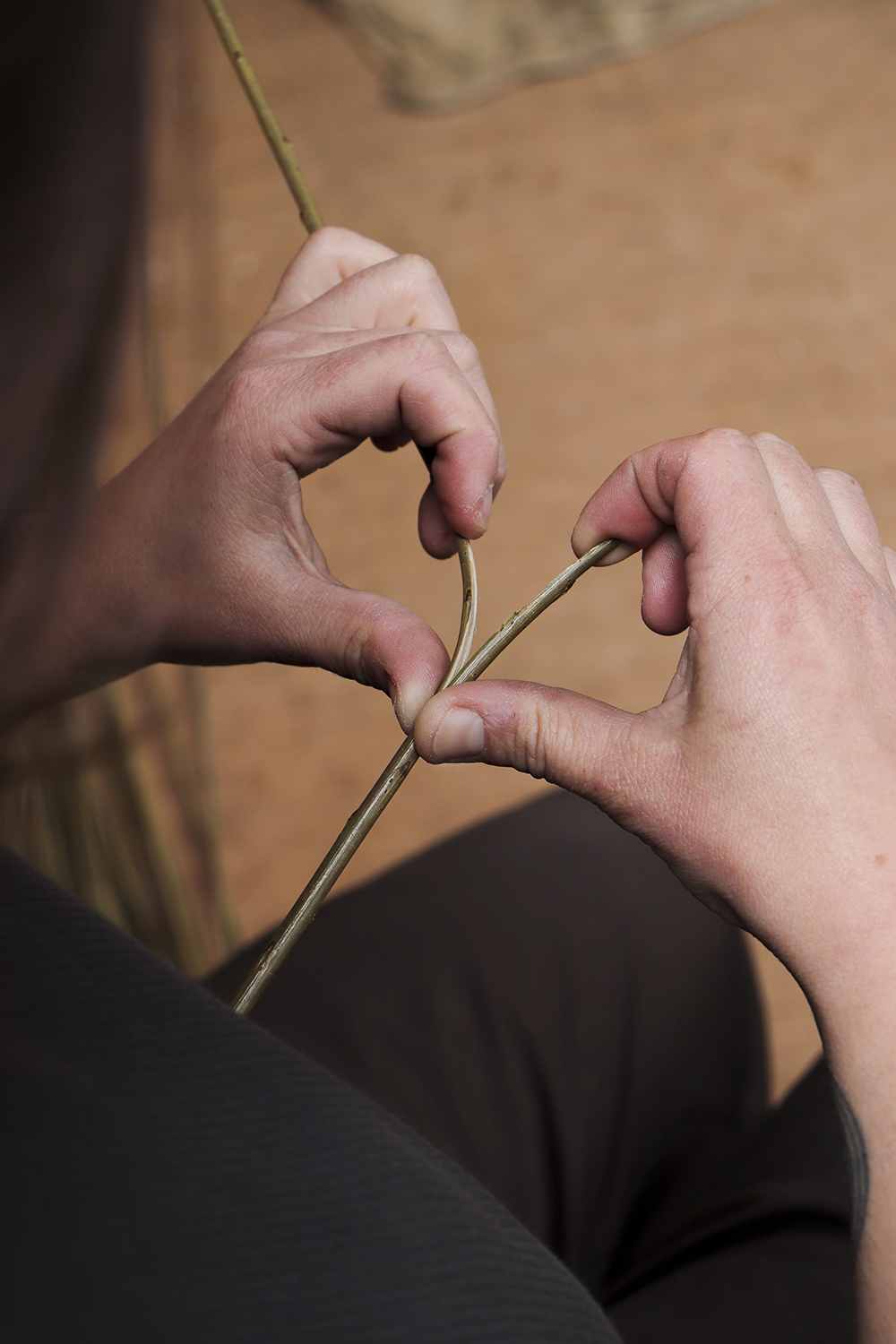
Hopewood is an art & craft studio collective established in 2021 by Sarah Loughlin and Marcus Wootton. Rooted in traditional basketry techniques, their practice spans woven sculptural vessels and contemporary functional baskets, all made in their studio in the Wyre Forest, UK. Drawing from their backgrounds in fine art, antiques, and photography, along with inspiration from the natural world, the duo blend art and craft to create woven objects. This cross-disciplinary approach allows them to create sculptural pieces that elevate living spaces, alongside functional works designed to add beauty, tactile richness, and intentionality to everyday tasks.
Willow basket weaving in the UK is an historic, hands-on vernacular craft borne out of locally available materials and practices. Basketry has ancient roots, dating back thousands of years in Britain, remaining largely unchanged since the Iron Age. Historically, baskets were strictly standardised for specific trades, from fishing creels to agricultural hampers. The arrival of plastic in the 1950s decimated the commercial trade, shrinking traditional willow-growing regions like the Somerset Levels. Today, it survives through a small community of professional artisans like Sarah and Marcus.
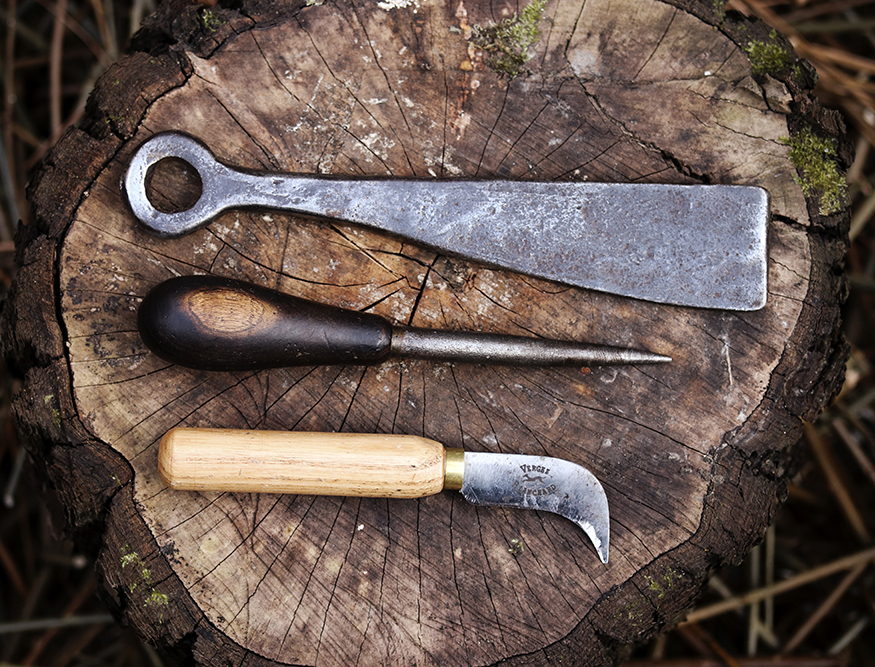
The makers at Hopewood use a combination of home-grown and Somerset willow, in colours naturally ranging through greens, browns and reds. Inspired by their local landscape, they are particularly skilled in creating baskets which make spectacular use of the different shades of willow. Baskets are woven using techniques with names like ‘French Rand’ and ‘Wale Weaving’, resulting in pieces with richly textured surfaces and striking colour combinations. Their basic tools include a rapping iron — a heavy tool used to tap rows downward for a tight, sturdy structure; a bodkin — a tapered metal or wooden spike used to wedge open spaces in the weave for adding new rods; and a curved pruning or utility knife for trimming rods and cleaning up loose ends.
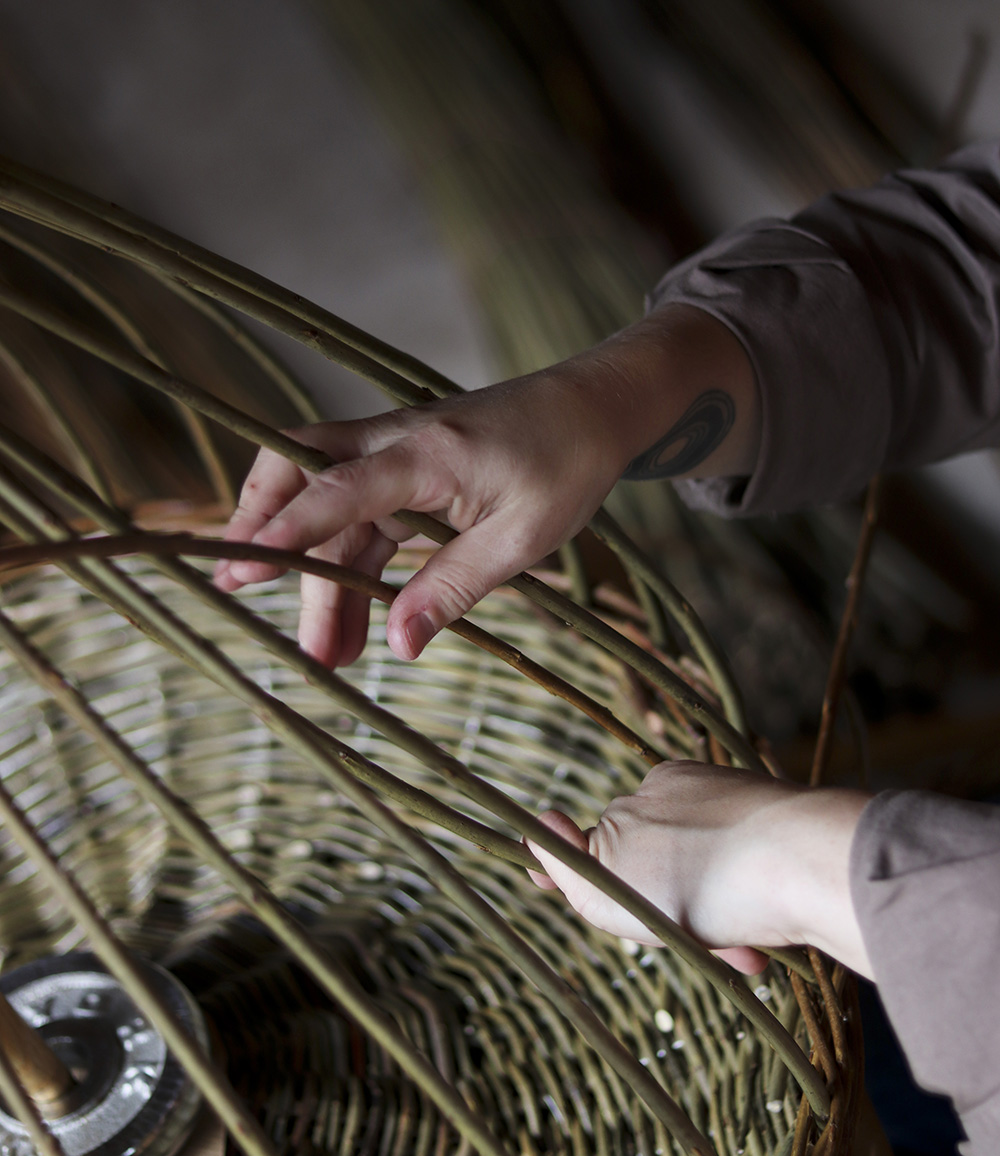
The basic weaving process begins with the base. Thick base rods are split and cross-woven into a central shape (the "slath"), which will be determined by the basket to be woven. The next stage is called up-stoking — thicker vertical stakes are inserted around the base and bent upright to form the skeleton of the basket. Next come the walls — flexible rods ("weavers") are woven horizontally in patterns like randing or waling around the vertical stakes. Finally, a finishing border is created — the vertical stakes are bent and locked down into a finished edge or handle.