
Menu
Your Cart
Monocle Magazine’s Top 100 Shops Worldwide | The Independent’s Top 50 Independent Stores UK | Financial Times' How to Spend It | Elle Decoration’s The New Shopkeepers
Free UK shipping for small parcels over £95 and large parcels over £150

Japanese Carbon Steel Knives
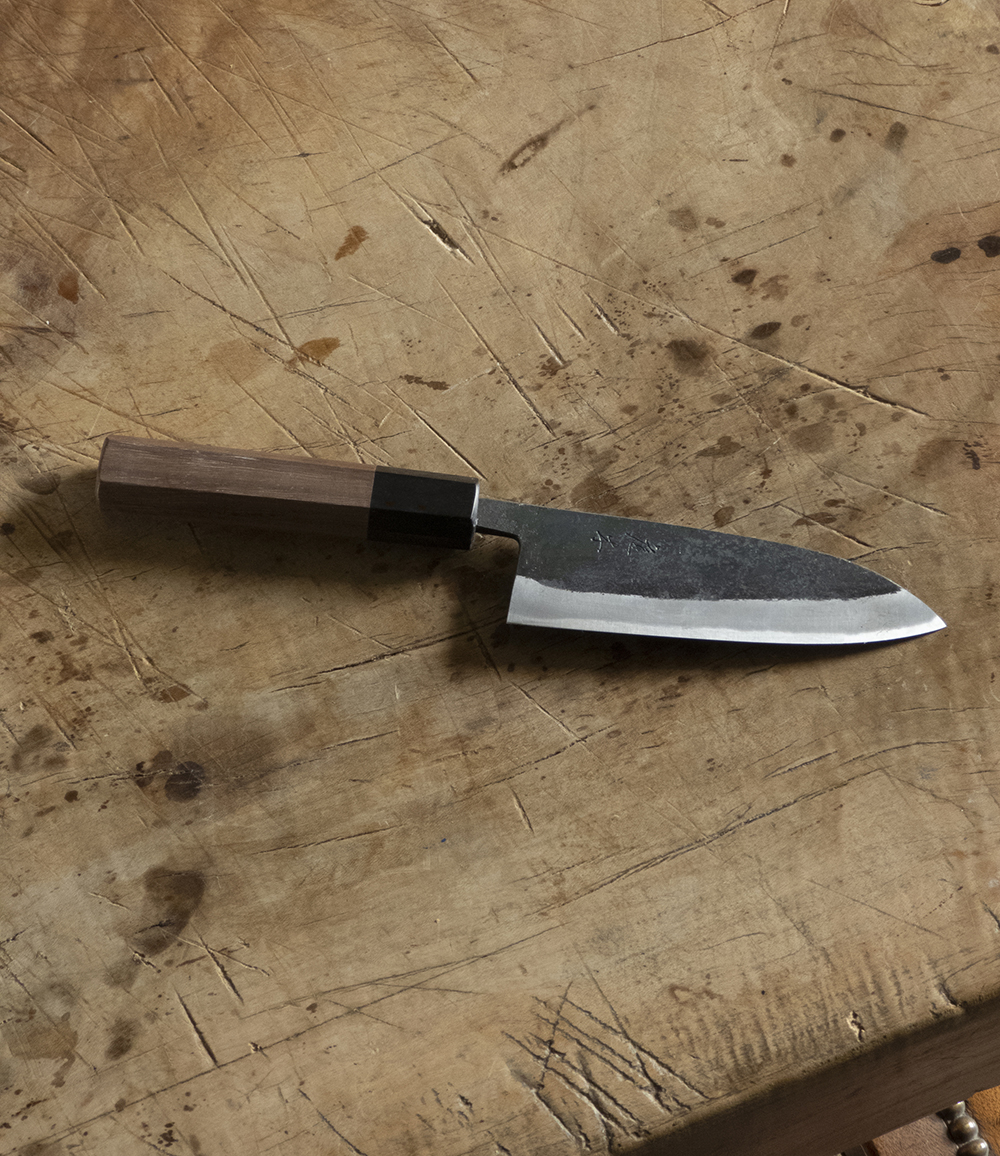
Japanese Carbon Steel Knives
Use & Maintenance

Western and Japanese knives are quite different in their applications and care requirements, and people will often have a combination of the two in their kitchen collection for this reason. Japanese knives are commonly made using very hard, fine carbon steel sandwiched between layers of more malleable steel, for stability. Japanese steel is renowned for its ability to achieve and maintain the very finest of edges — clean enough to slice through a single sheet of paper with no resistance. The grain of the steel is both harder and finer than that found in Western knives, though is somewhat more brittle. This makes blades prone to chipping if mis-used. Japanese culinary philosophy treats the knife as a fine instrument for finesse rather than a blunt tool for heavy-duty chopping. Western knives are more robust, capable of jobs such as cracking lobster tails, or boning lamb, whereas Japanese knives will simply break if used for such heavy duty jobs.
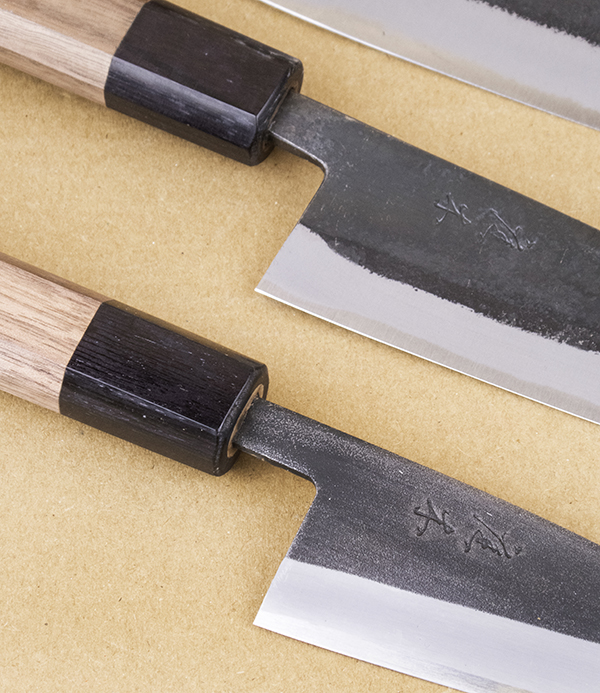
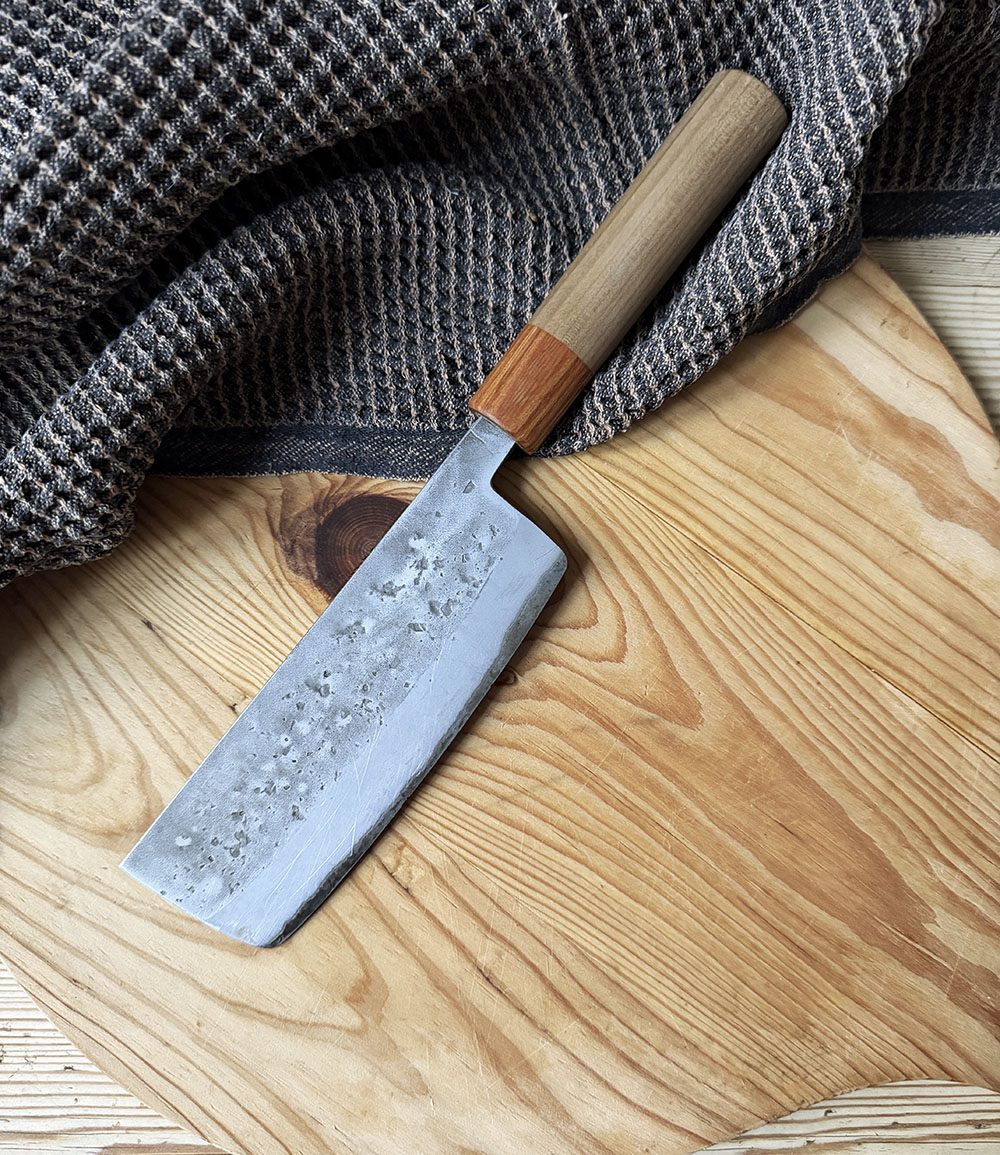
Japanese knives require extra attention to sharpening, due to the thin and precise nature of their blades — hand sharpening with a soak whetstone is the best way of retaining the correct bevel of the knife. Japanese knifes are often sharpened at a 15 degree angle, and it is important to note if the knife is a single (one side) or double (both sides) beveled/edged knife. The geometry of the blade is very much more acute than that seen on Western knives, this means that common sharpening devices will not work, and can even damage the blade instead of improving them. Again, whetstones with a medium (1000) to fine grit (3000-8000) soaked in water are the best way to sharpen a Japanese knife. Never use a coarser grit than this as it will only erode the blade instead of sharpen it due to the softness of the steel. Honing and stropping the blade should follow every sharpening.
Due to the unalloyed nature of Japanese carbon steel knives, they are especially prone to rust if left wet or stored in damp conditions. The rapid oxidisation can occur after exposure to high quantities of salty or acidic foods, which is why we recommend washing and drying the knives immediately after use (referring back to the care previously provided above). Japanese knives, should also never go in a dishwasher, as it will destroy both the edge and handle. Over time and use, the blade of the knife will change colour and develop a patina (often varying shades of grey, blue and green) — this is normal, and often desired by users as it creates unique character and personality to the blade, whilst also creating a protective layer on the steel.

Further Information

Slicing Not Cleaving

It is important to remember that these are slicing knives, and should not be used as a cleaver, or for any vigorous jobs. The blade of Japanese knives requires proper use and respect. Controlled slicing, preferably with a gentle pull stroke so that the blade travels diagonally down through the material with minimal force, and without tearing. These are tools of precision and finesse, rather than speed and force. Use with wooden chopping boards as this is the best surface for protecting the integrity of the blade.

Stropping and Honing

Between thorough sharpening of the blade, there are two other techniques important to Japanese knife care. Honing realigns the a dull or bent edge of a blade using a ceramic or steel rod by puling the edge downwards with light pressure at a 15-20 degree angle. This can be done on a regular basis before use. After honing, stropping polishes the blade and removes any microscopic residue left behind after sharpening by pulling the blade edge backwards at a 10-20 degree angle across a flat smooth piece of leather fixed on a wooden paddle. During this motion, the spine of the knife should lead in the direction of movement while the blade edge trails behind as to not catch on the leather.
We’re celebrating the launch of our online update with a 10% discount during the month of September!
Use the code OoU-Renew at checkout