Monocle Magazine’s Top 100 Shops Worldwide | The Independent’s Top 50 Independent Stores UK | Financial Times' How to Spend It | Elle Decoration’s The New Shopkeepers
Monocle Magazine’s Top 100 Shops Worldwide
The Independent’s Top 50 Independent Stores UK
Financial Times' How to Spend It
Elle Decoration’s The New Shopkeepers
Free UK shipping for small parcels over £95 and large parcels over £150
Free UK shipping for small parcels over £95
Free UK shipping for large parcels over £150

Natural Hairbrushes and Combs
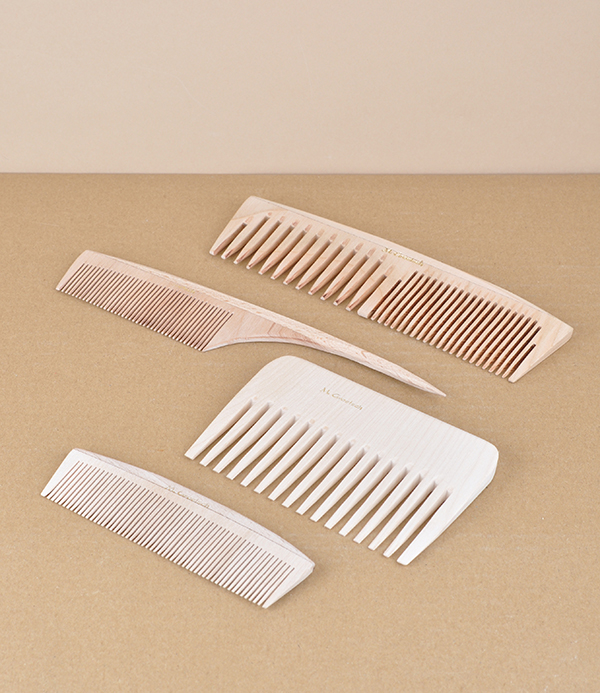
Natural Hairbrushes and Combs
Use & Maintenance
The ideal hairbrush or comb you use depends on the texture and length of your hair. For long, fine hair, you may want to use a boar bristle brush — ideal for detangling and redistributing oil from the scalp down to the drier ends of the hair. For shorter, curly hair, we might recommend using a wide tooth, wooden comb. Of course, this is completely personal preference, and whichever brush works best for your hair is the one we think you should use. That being said, certain brushes require certain types of care — depending on the material or shape of the brush this can vary.
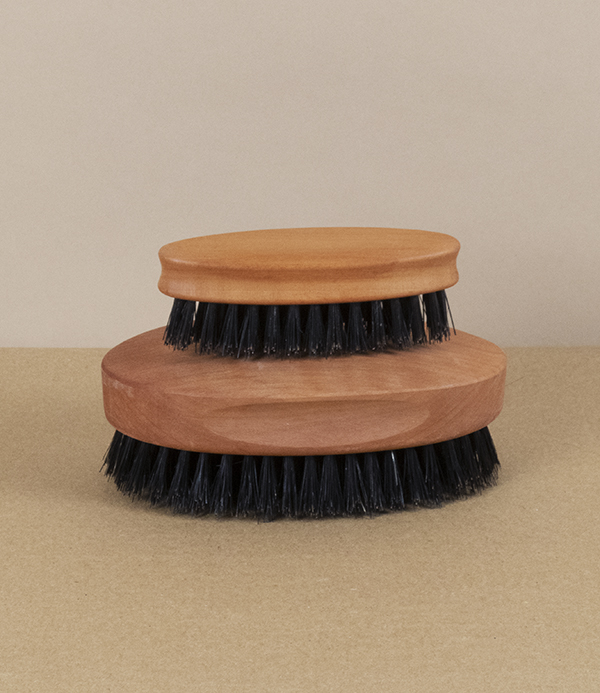
Every brush with bristles is made up of individual bunches of fibres or hairs called ‘stockings’. Stockings are held in place to a brush by wire, glue, or even a cushion depending on the type of brush. To care for these brushes, we highly recommend a brush rake, as it is ideal for removing hairs from the base of the brush, allowing you to get into the nooks and crannies that aren’t reachable with fingertips. It is important to clean hairbrushes weekly to ensure buildup does not occur — dead skin, hair, etc. for sanitary purposes. Clean using Marius Fabre’s white soap or a mild shampoo by wetting the bristles of the brush only and not the handle, and gently rubbing into the soap with circular motions. Rinse thoroughly afterwards, again, taking caution to avoid moisture reaching the base of the brush. To dry, remove excess moisture by patting the bristles with a towel, and then leaving the brush to dry in a well ventilated area, bristle side down.
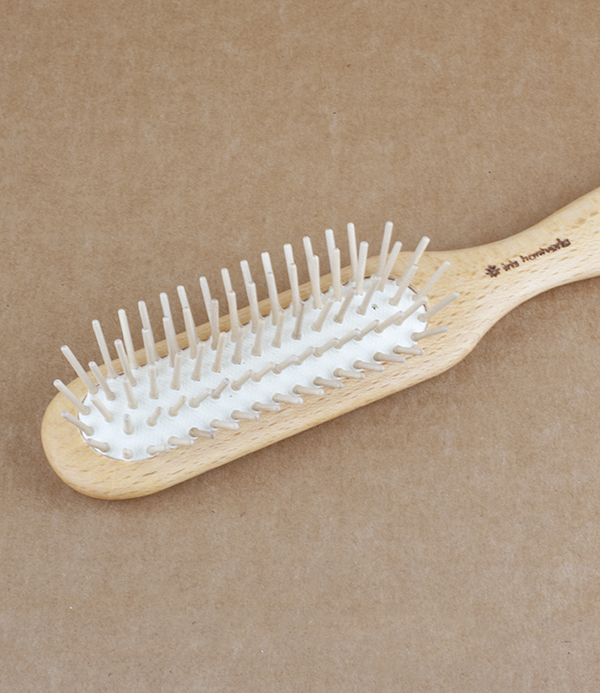
Brushes with wooden pins should be cared for similarly to the above instructions, but do mind that the pins are made of wood and are more susceptible to damage if not done delicately. Remove excess hair with the aforementioned hair rake, and any other buildup can be removed with a cotton swap saturated with a bit of warm soapy water. Take extra care in making sure no moisture gets into the cushion of the brush, as this can cause mould to grow.