Monocle Magazine’s Top 100 Shops Worldwide | The Independent’s Top 50 Independent Stores UK | Financial Times' How to Spend It | Elle Decoration’s The New Shopkeepers
Monocle Magazine’s Top 100 Shops Worldwide
The Independent’s Top 50 Independent Stores UK
Financial Times' How to Spend It
Elle Decoration’s The New Shopkeepers
Free UK shipping for small parcels over £95 and large parcels over £150
Free UK shipping for small parcels over £95
Free UK shipping for large parcels over £150

Sharpening Stones
Sharpening Stones
A How To Guide
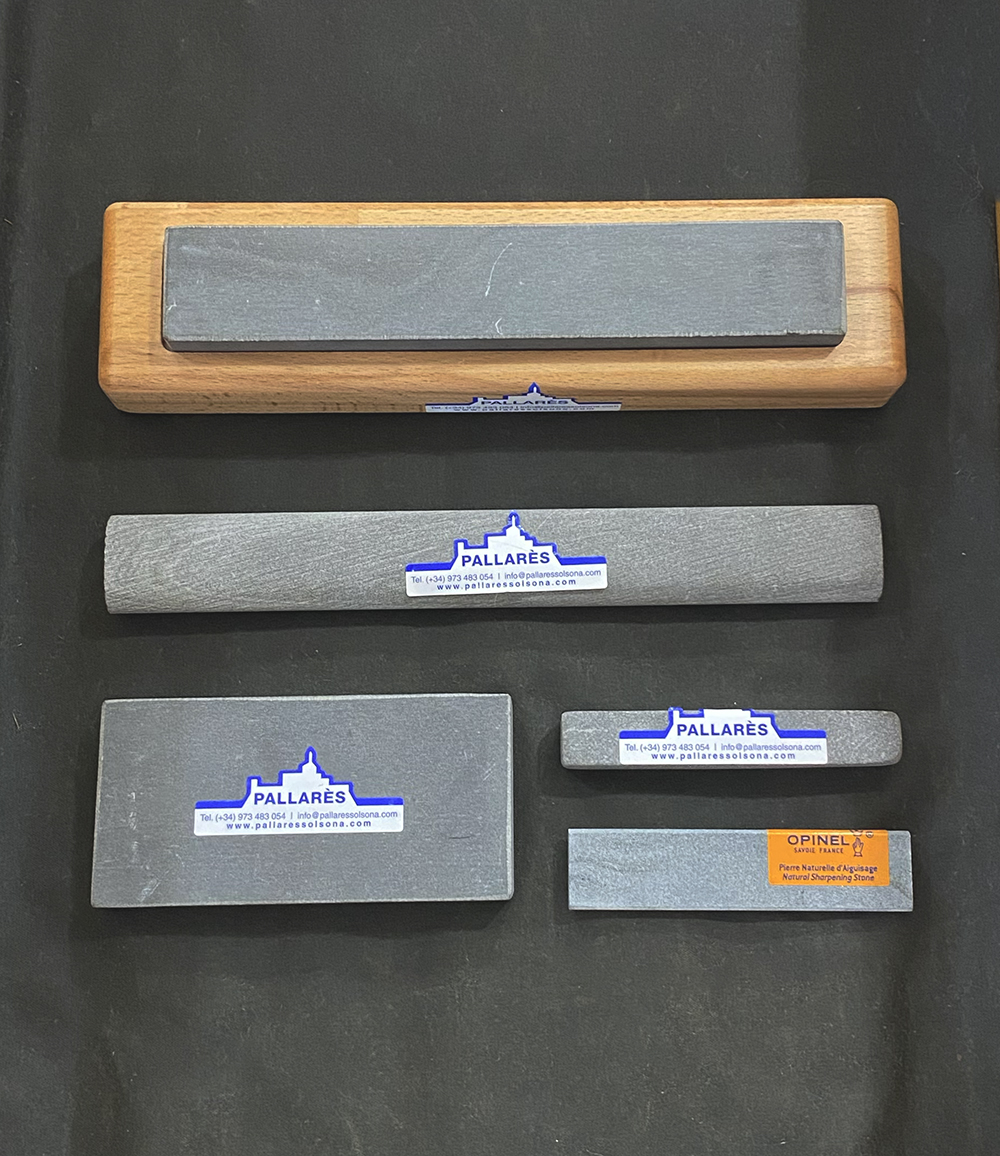
Stones were the original tools of knife sharpeners and the first sharpening tools ever used. Originally, they were used to sharpen any bladed tool by running the stones along the blade. Although the technique has evolved over time, stones continue to be one of the most widely used tools for sharpening knives. Most sharpening stones are natural elements extracted from quarries, typically made of sandstone or shale. Sharpening stones are distinguished by their particles; some have coarse particles which are suitable for sharpening extremely damaged knives, while others have finer particles that is more suitable for sharper knives. Typically, sharpeners will use multiple stones, working from coarser to finer as the knife gets sharper and sharper.
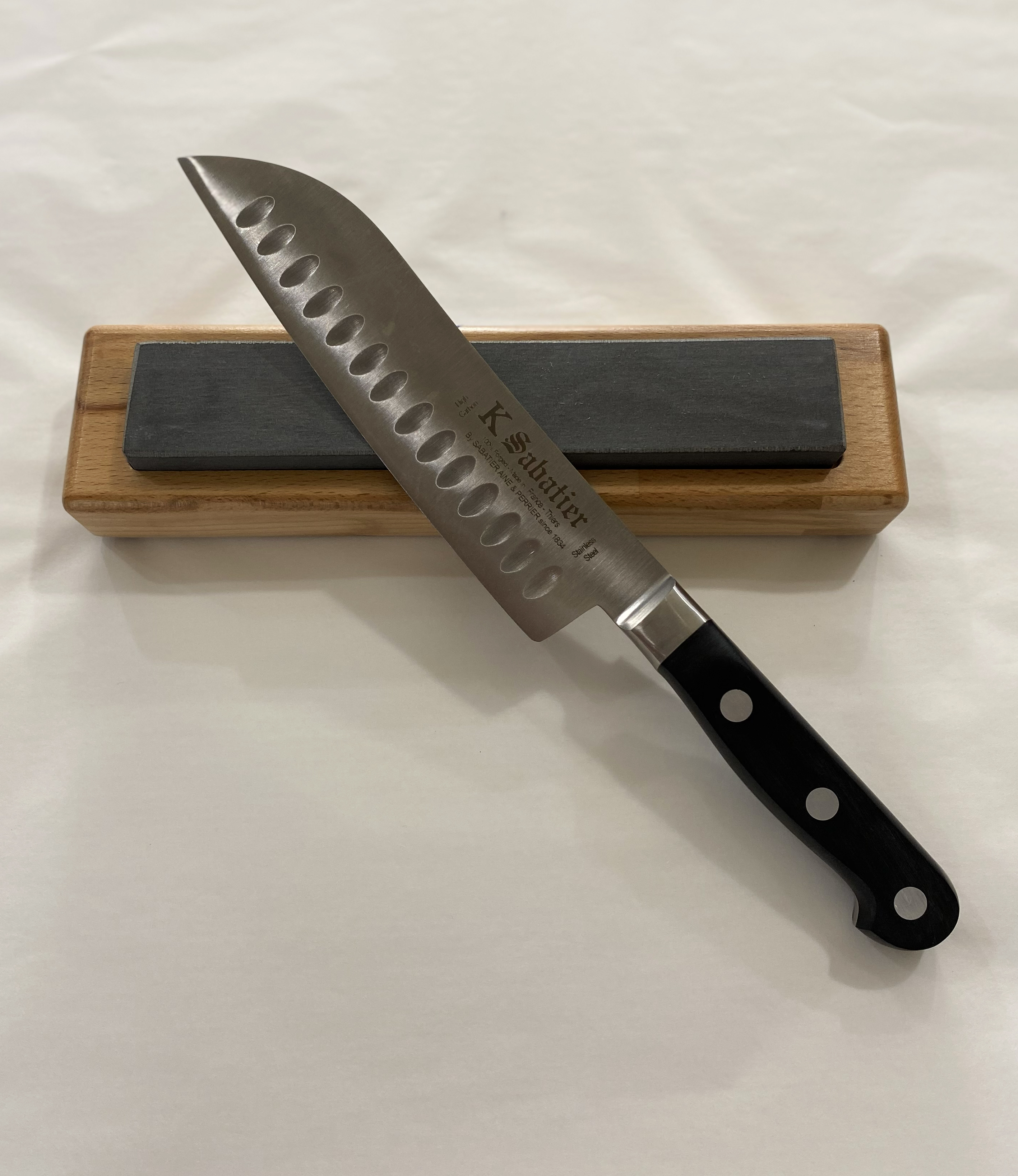
Hold the knife at a 20° angle against the soaked wet stone to prevent the blade or cutting edge from becoming damaged. To create a 20° angle, place your thumb on the back of the blade, then place the knife against the stone. Please note that Japanese knives often require a shallower angle, anywhere between 10°-15° on each side. To sharpen, press gently and push the knife away from you using your dominant hand, gliding the entire length of the cutting edge against the stone. If you sharpen your knives regularly, five glides should be enough. Next, turn your knife over and repeat, this time placing your index finger on the back of the blade to create the 20° angle. You may notice that small white marks can appear on the blade — this is just sediment from the stone. Make sure you clean the knife after sharpening by rinsing it with water or wiping with a cloth.
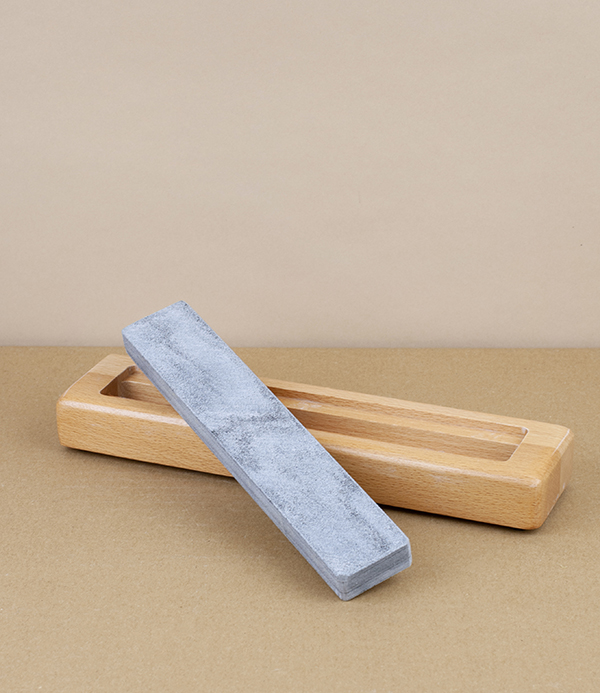
Don’t forget to clean your sharpening stone after each use by rinsing it with water and letting it dry fulling before storing it; this removes the stone dust and steel particles, preventing the pores from clogging. Sharpening stones are incredibly durable and have an extremely long life span — just be careful not to drop them as they may break.